

Why Does Sitting Cause Back Pain? Causes, Relief, and When to See a Chiropractor
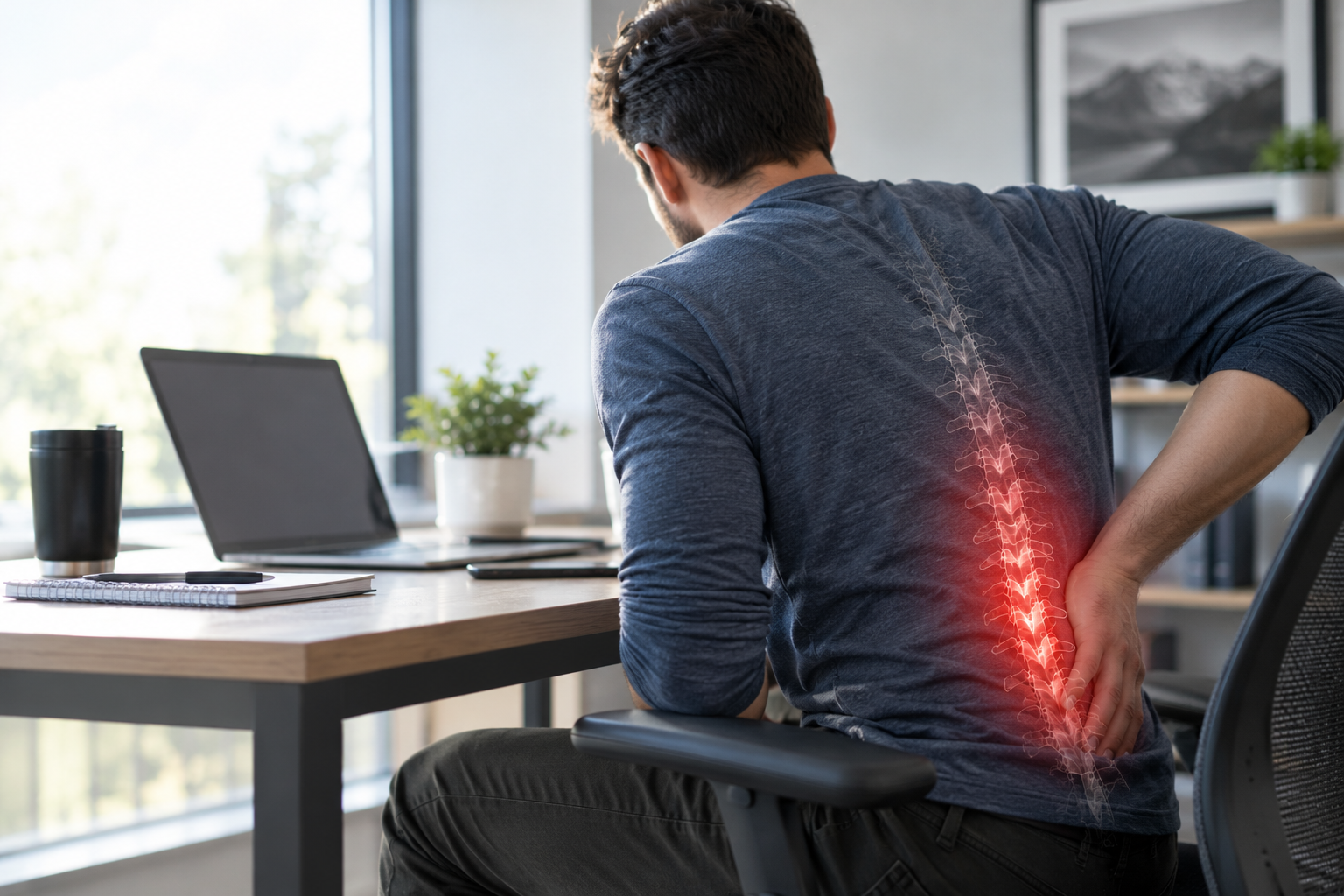
Do you notice your back starting to ache after sitting at your desk, driving, or relaxing on the couch? Maybe your lower back feels stiff when you stand up, or you find yourself constantly shifting positions to get comfortable.
Sitting can contribute to back pain, but it is not always the sitting position itself that causes the problem. Staying in one position for too long, reduced movement, muscle fatigue, and an underlying back condition can all play a role.
For people who work at a desk, commute regularly, or spend much of the day sitting, understanding why symptoms develop can help identify practical ways to reduce discomfort.
At Emerson Chiropractic, we help patients throughout Indianapolis, Greenwood, and the surrounding Southside communities evaluate back pain and explore appropriate treatment options.
Why Does Sitting Make Your Back Hurt?
Back pain during sitting can have several possible causes. The pattern of your symptoms, their location, and what makes them better or worse can help guide an evaluation.
1. Staying in One Position for Too Long
Your body is designed to move. Sitting for extended periods reduces the variety of movement your spine, hips, and surrounding muscles experience throughout the day.
When you remain in one position for a long time, tissues may become sensitive or uncomfortable. You might notice stiffness when you stand up or feel the need to stretch and move around.
This does not mean sitting is inherently harmful. Rather, prolonged, uninterrupted sitting may aggravate symptoms in some people, particularly when they already have back pain.
Changing positions regularly and taking brief movement breaks can help reduce discomfort.
2. Muscle Fatigue and Reduced Movement
Your trunk muscles help support your body and coordinate movement during everyday activities. Sitting requires relatively little movement compared with walking, lifting, or other active tasks.
Depending on your posture and the length of time you sit, certain muscles may remain active for prolonged periods while others contribute less to movement throughout the day. This can contribute to fatigue or discomfort.
Regular walking, general physical activity, and appropriate strengthening exercises can help improve your tolerance for sitting and other daily activities.
3. Your Sitting Position and Workstation Setup
The way you sit may influence how much strain or discomfort you experience, but there is no single perfect posture that works for everyone.
For example, you might notice more discomfort when:
Your chair does not provide comfortable support.
Your monitor is positioned so you repeatedly lean forward.
Your feet do not rest comfortably on the floor or a footrest.
You sit at the edge of your chair for long periods.
You work on a laptop without adjusting the screen or keyboard position.
A comfortable, adjustable workstation can make it easier to change positions and avoid repeatedly working in a position that aggravates your symptoms.
Slouching does not automatically mean you will develop back pain, and sitting upright all day is not necessarily the answer. Comfort, movement variety, and gradually building physical tolerance are often more useful goals than maintaining one rigid posture.
4. Existing Lower Back Conditions
Sitting may aggravate back pain associated with several musculoskeletal conditions, including some cases of nonspecific low back pain, disc-related pain, or irritation of nearby structures.
For some people, bending forward or sitting increases symptoms. Others feel worse when standing or walking.
Pain that travels into the buttock or leg may sometimes involve nerve irritation, including sciatica. However, symptoms alone cannot reliably identify the underlying cause.
If your back pain consistently worsens with sitting, an appropriate clinical evaluation can help determine whether you may benefit from targeted treatment or further medical assessment.
5. Limited Hip Mobility or Reduced Activity Tolerance
Your lower back and hips work together during sitting, standing, bending, and walking. Hip stiffness or limited tolerance for prolonged sitting may contribute to discomfort during certain movements.
For some people, gentle mobility exercises and progressive strengthening can help. However, stretching is not necessary for every cause of back pain, and forcing a movement that increases symptoms is not recommended.
The most appropriate exercises depend on your symptoms, movement limitations, and overall health.
Why Does My Lower Back Hurt When I Stand Up After Sitting?
Some people feel relatively comfortable while seated but experience stiffness or pain when they stand.
After remaining in one position, your body may need a little time to adjust to movement again. If your back is already sensitive, the transition from sitting to standing can temporarily aggravate symptoms.
You may find it helpful to:
Move your feet underneath you before standing.
Stand up gradually rather than twisting suddenly.
Take a few comfortable steps after getting up.
Alternate sitting with brief periods of standing or walking throughout the day.
If the pain is severe, persistent, progressively worsening, or associated with leg weakness or numbness, seek an appropriate medical evaluation.
How Can You Reduce Back Pain From Sitting?
You do not necessarily need to stop sitting or invest in an expensive chair. A few practical changes may help you manage symptoms.
Take Movement Breaks
Stand, walk, or change positions regularly instead of remaining seated for hours without a break. Even short periods of movement can help interrupt prolonged sitting.
There is no single break interval that works for everyone. Start with a routine you can maintain and adjust it based on your symptoms and work demands.
Adjust Your Workstation
Aim for a setup that allows you to work comfortably without repeatedly leaning or reaching.
Keep your screen at a comfortable viewing height.
Position your keyboard and mouse so your shoulders can relax.
Adjust your chair so your feet are supported.
Use a cushion or backrest if it improves comfort.
Keep frequently used items within easy reach.
The goal is not to hold one perfect position all day. It is to make comfortable movement and position changes easier.
Build Strength and General Activity
Walking, appropriately selected trunk-strengthening exercises, and regular physical activity can help improve your capacity for everyday demands.
You do not need an elaborate exercise program to get started. Choose activities you can perform comfortably and build up gradually.
If a particular exercise consistently increases your pain, especially pain traveling down your leg, stop that movement and seek guidance on appropriate modifications.
Pay Attention to Your Symptom Pattern
Consider keeping track of when your pain starts, which activities aggravate it, and what helps it settle.
For example, does your back hurt after 20 minutes of sitting, after a two-hour drive, or only when you stand up? Does walking help, or does it make the pain worse?
These details can help a healthcare professional understand your symptoms and determine whether additional assessment is needed.
Can a Chiropractor Help With Back Pain From Sitting?
Chiropractic care may help some people whose sitting-related back pain is associated with musculoskeletal conditions.
An evaluation can help assess your symptoms, movement, medical history, and functional limitations. Depending on the findings, treatment may include:
Chiropractic manipulation or mobilization: Selected manual techniques may help some patients with nonspecific low back pain experience improvements in pain and function.
Therapeutic exercises: Exercises may help improve strength, coordination, mobility, and tolerance for everyday activities.
Stretching and movement guidance: These approaches may be useful when specific movement limitations or activity patterns contribute to discomfort.
Workstation and activity recommendations: Practical changes can help you manage the demands of desk work, driving, and other prolonged sitting activities.
Treatment should be individualized. Not every case of back pain requires spinal manipulation, and improvement cannot be guaranteed. If symptoms suggest a more serious condition or do not improve as expected, further medical evaluation may be necessary.
When Should You Seek Medical Attention for Back Pain?
Most back pain is not a medical emergency, but certain symptoms should not be ignored.
Seek emergency medical care if you experience new loss of bladder or bowel control, difficulty urinating with new back symptoms, numbness around the groin or saddle area, or significant or rapidly worsening leg weakness.
Prompt medical assessment is also important for back pain associated with major trauma, fever, a history of cancer, unexplained weight loss, or other concerning symptoms.
If pain continues to interfere with sitting, working, sleeping, or daily activities, arrange an evaluation to better understand the cause and appropriate treatment options.
Frequently Asked Questions
Is sitting bad for your back?
Not necessarily. Sitting is a normal activity, and it does not automatically cause back pain or damage your spine. However, prolonged sitting may aggravate symptoms in some people. Changing positions, staying active, and building physical tolerance can help.
Why does my lower back hurt after sitting for a long time?
Possible reasons include prolonged positioning, muscle fatigue, sensitivity in the lower back, or an underlying musculoskeletal condition. The cause varies from person to person, particularly when pain is persistent or radiates into the leg.
Is it better to sit or stand when you have back pain?
Neither position is universally best. Some people feel better sitting, while others prefer standing or walking. Alternating positions and avoiding prolonged periods in any one position may help you manage symptoms.
Can a bad chair cause back pain?
An uncomfortable chair or poorly adjusted workstation may contribute to discomfort, particularly during long periods of sitting. However, back pain usually has multiple possible contributing factors, and changing chairs alone may not resolve persistent symptoms.
What is the best sitting position for lower back pain?
There is no single ideal posture for everyone. Aim for a comfortable position that supports your feet and allows your shoulders to relax, then change positions regularly. Movement variety is generally more useful than trying to maintain a rigid posture throughout the day.
Should I see a chiropractor if sitting causes back pain?
A chiropractor may be able to evaluate musculoskeletal back pain and discuss appropriate conservative treatments. Seek prompt medical assessment if you have severe or worsening symptoms, new neurological problems, or other warning signs.
Can sitting cause sciatica?
Prolonged sitting may aggravate symptoms in some people with sciatica, but sitting alone does not establish the cause. Pain that travels down the leg should be evaluated when persistent, severe, or associated with numbness or weakness.
Back Pain Treatment in Indianapolis and Greenwood
If sitting at work, driving, or spending time at home regularly aggravates your back pain, you do not have to guess at the cause.
At Emerson Chiropractic, we serve patients throughout Indianapolis, Greenwood, Southport, and nearby Southside communities. We evaluate musculoskeletal complaints and help patients understand appropriate conservative treatment options based on their symptoms and clinical findings.
Depending on your needs, care may include chiropractic treatment, therapeutic exercises, stretching, and guidance on managing everyday activities.
Our goal is to help you better understand your back pain and determine an appropriate path forward.
Schedule an Evaluation at Emerson Chiropractic
If back pain is making it difficult to sit comfortably, work at your desk, or enjoy your usual activities, contact Emerson Chiropractic to discuss scheduling an evaluation.
Schedule your Evaluation with Emerson Chiropractic Today.
Serving Indianapolis, Greenwood, Center Grove, Southport, Franklin Township, and surrounding Southside communities.



Our Services
Contact Info
Phone: (317) 884-2636
Fax: (317) 884-2633
Hours of Operation
- Monday 9:00am – 12:00pm & 2:00pm – 6:00pm
- Tuesday 1:00pm – 6:00pm
- Wednesday 9:00am – 12:00pm & 2:00pm – 6:00pm
- Thursday 9:00am – 12:00pm
- Friday 9:00am – 12:00pm & 1:00pm – 4:00pm
- Saturday Closed
- Sunday Closed

© 2026 Emerson Chiropractic. All rights Reserved. Accessibility Statement - Privacy Policy - Terms & Conditions - Sitemap
Powered by:
