
Personal Injury Chiropractic Care After a Car Accident
Why You Should See a Chiropractor in Indianapolis & Greenwood After an Auto Accident
Car accidents — even at low speeds — can place significant stress on the spine, muscles, and surrounding soft tissues. Many injuries are not immediately obvious, and symptoms may take hours or even days to fully develop.
Common injuries after an auto accident include:
Whiplash
Neck and shoulder pain
Lower back pain
Headaches and migraines
Soft tissue injuries (sprains and strains)
Disc herniations or bulges
For many patients in Indianapolis, Greenwood, Center Grove, and surrounding Southside communities, early chiropractic evaluation is a critical step — not only for recovery, but also for proper documentation in a personal injury case.
Why Early Chiropractic Care Matters
One of the most important things to understand after a car accident is that pain is often delayed.
You may feel “fine” immediately after the accident, only to develop stiffness, headaches, or back pain days later. This delay happens because inflammation and soft tissue damage take time to surface.
A chiropractic evaluation helps identify these issues early — before they become chronic.
Early intervention can:
Reduce inflammation and pain
Restore normal joint motion
Prevent long-term spinal dysfunction
Improve mobility and daily function
Shorten overall recovery time
In addition, early documentation creates a clear timeline between the accident and your symptoms — which is essential for insurance and personal injury claims.
Common Auto Accident Injuries Treated by Chiropractors
1. Whiplash
Whiplash is one of the most common car accident injuries. It occurs when the head is rapidly forced forward and backward, placing strain on the muscles, ligaments, and joints of the neck. Symptoms may include:
Neck stiffness and tightness
Headaches (often at the base of the skull)
Shoulder and upper back pain
Reduced range of motion
If left untreated, whiplash can lead to chronic neck pain and recurring headaches.
2. Lower Back Pain
Even minor collisions can compress the lumbar spine, irritating joints and discs. Patients often experience:
Dull aching or sharp pain in the lower back
Pain with sitting or bending
Stiffness after inactivity
Without proper care, these issues can become long-term mechanical problems.
3. Soft Tissue Injuries
Sprains and strains affect muscles, ligaments, and tendons. These injuries are especially tricky because they:
May not show up on imaging
Often appear days after the accident
Can lead to long-term instability if untreated
4. Disc Injuries
The force of impact can cause discs to bulge or herniate, placing pressure on nearby nerves. This may result in:
Radiating pain into the arms or legs
Numbness or tingling
Weakness in extremities
Disc injuries are one of the most common reasons patients require more structured care, including decompression and rehabilitation.
5. Headaches & Migraines
Post-accident headaches are often cervicogenic — meaning they originate from the neck. These headaches are commonly linked to:
Whiplash injuries
Upper cervical joint dysfunction
Muscle tension and inflammation
Addressing the underlying cause is key to long-term relief.
What to Expect at Your First Personal Injury Chiropractic Visit
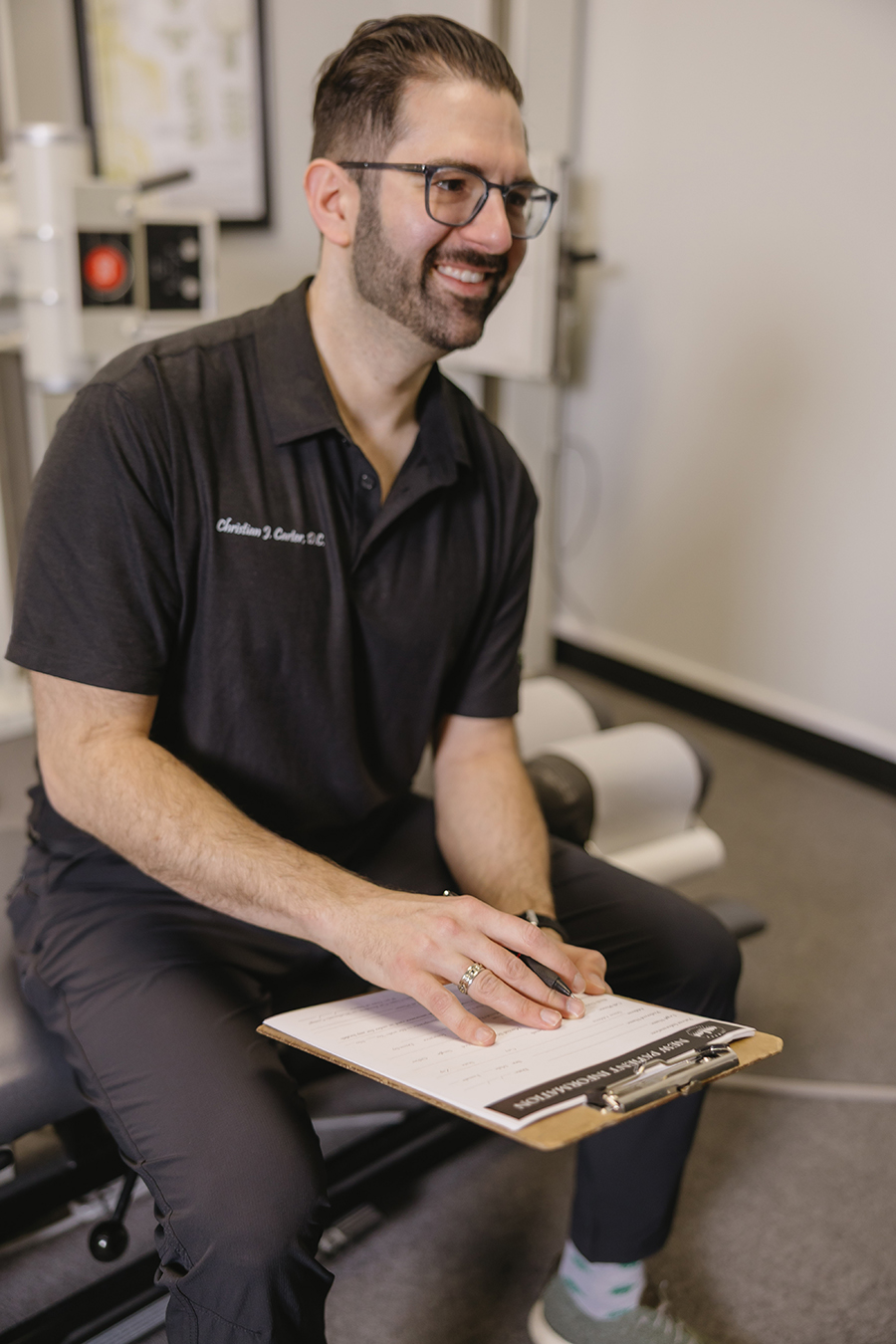
At Emerson Chiropractic, your first visit is focused on clarity, accuracy, and proper documentation. Your evaluation includes:
Detailed health and accident history
Postural and movement assessment
Orthopedic and neurological testing
Imaging if clinically necessary
A clear, personalized treatment plan
This process ensures you receive the right care from the start — while also creating thorough documentation for your personal injury case.
Learn What to Expect at Your First Visit (Link to: /first-visit/)
Chiropractic Treatments Commonly Used for Car Accident Injuries
Treatment is based on your specific injuries and may include:
Spinal adjustments to restore joint mobility
Soft tissue therapy (massage, trigger point work)
Corrective exercises to improve stability
Spinal decompression for disc-related injuries
Cold laser, ultrasound, or electrical stimulation to reduce inflammation
The goal is not just pain relief — but restoring proper function and preventing long-term issues.
How Chiropractic Care Supports Personal Injury Claims
Chiropractic care plays a critical role in both medical recovery and legal documentation. Your chiropractor provides:
Detailed injury reports
Objective findings and diagnosis
Ongoing symptom tracking
Treatment progress documentation
This creates a clear, consistent medical record that supports your case while guiding your recovery.
When Should You See a Chiropractor After a Car Accident?
You should schedule an evaluation:
As soon as possible after an accident
If you experience neck, back, or shoulder pain
If headaches, numbness, or tingling develop
Even if symptoms are mild or delayed
Waiting too long can allow minor injuries to become chronic and more difficult to treat.



Our Services
Contact Info
Phone: (317) 884-2636
Fax: (317) 884-2633
Hours of Operation
- Monday 9:00am – 12:00pm & 2:00pm – 6:00pm
- Tuesday 1:00pm – 6:00pm
- Wednesday 9:00am – 12:00pm & 2:00pm – 6:00pm
- Thursday 9:00am – 12:00pm
- Friday 9:00am – 12:00pm & 1:00pm – 4:00pm
- Saturday Closed
- Sunday Closed

© 2026 Emerson Chiropractic. All rights Reserved. Accessibility Statement - Privacy Policy - Terms & Conditions - Sitemap
Powered by:
