
Chiropractic Care for Back Pain in Indianapolis & Greenwood
Helping Patients Find Lasting Relief Across Indianapolis, Greenwood, Center Grove & Southside Communities
Back pain is one of the most common reasons people seek healthcare—and one of the most frustrating conditions to live with.
Whether it starts after lifting something heavy, working in the yard, sitting at a desk all day, recovering from a car accident, or seemingly comes out of nowhere, back pain can make even the simplest daily activities difficult. Sleeping comfortably, driving, exercising, working, and spending time with your family can all become more challenging when your back hurts.
At Emerson Chiropractic, we understand that no two patients experience back pain the same way. Our goal is to identify what's contributing to your symptoms, explain our findings in a way that's easy to understand, and develop a personalized treatment plan focused on helping you move better, feel better, and get back to doing the things you enjoy.
We proudly serve patients throughout Indianapolis, Greenwood, Center Grove, Southport, and surrounding Southside communities with conservative, non-surgical chiropractic care.
Understanding Back Pain: It's More Than Just "A Bad Back"
One of the biggest misconceptions about back pain is that it's a diagnosis.
In reality, back pain is a symptom, and many different structures in the body can produce similar discomfort.
Pain may originate from:
Muscles and tendons
Ligaments
Spinal joints (facet joints)
Intervertebral discs
Nerves
Sacroiliac (SI) joints
Because these tissues work together to support movement, irritation in one area can often affect another. That's why two people with pain in the exact same location may have completely different underlying causes.
Simply treating where it hurts isn't always enough. Understanding why it hurts is what helps guide effective care.
Clinical Perspective: Why Finding the Source of Pain Matters
One of the most important parts of a chiropractic evaluation isn't identifying where your back hurts, it's determining what structure is likely generating the pain.
For example, two patients may both point to the same spot in their lower back. One may have a strained muscle after lifting a heavy box, while the other may have irritation from a spinal joint or a bulging disc. Although the pain feels similar, the recommended treatment and expected recovery can be very different.
This is why we spend time listening to your history, evaluating movement, and performing orthopedic and neurological testing before recommending care. Our goal is to understand the "why" behind your symptoms, not simply treat the pain itself.
What Does Back Pain Feel Like?
Back pain can present in many different ways depending on the structures involved.
Patients commonly describe:
A dull, aching pain
Sharp pain with certain movements
Muscle spasms or tightness
Burning sensations
Pain that travels into the hip or leg
Stiffness after sitting
Difficulty standing upright
Pain that improves with movement or worsens with activity
Some people experience occasional flare-ups, while others develop persistent symptoms that gradually become more limiting over time.
Clinical Perspective: The Pattern of Your Pain Can Tell a Story
One of the first questions we ask isn't just "Where does it hurt?", it's "What makes it better, and what makes it worse?"
For example:
Pain that worsens with prolonged sitting may suggest a different pattern than pain that increases with standing or walking.
Morning stiffness that improves after moving around can provide different clues than pain that builds throughout the day.
Pain that travels below the knee raises different considerations than pain that stays in the lower back.
While these patterns don't provide a diagnosis on their own, they help us narrow down what may be contributing to your symptoms and guide the physical examination.
Common Causes of Back Pain
Muscle Strains & Ligament Sprains
Spinal Stenosis
Work-Related Injuries
Clinical Perspective: More Pain Doesn't Always Mean More Damage
Pain is an important signal but it doesn't always reflect the severity of an injury.
Some patients experience significant muscle spasms after a relatively minor strain, while others with a disc injury may have only mild back pain but more noticeable symptoms traveling into the leg.
That's why we don't rely on pain alone. We consider your history, movement patterns, neurological findings, and overall function to develop the clearest picture possible of what's contributing to your symptoms.
When Should You See a Chiropractor?
Many episodes of back pain improve with time, but there are situations where an evaluation is a good idea.
Consider scheduling an appointment if your pain:
Persists for several days without improving
Keeps coming back
Travels into the leg
Includes numbness or tingling
Interferes with sleep or daily activities
Developed after a car accident or injury
Limits your ability to exercise or work
Early evaluation can often help identify the cause of your symptoms before they become more difficult to manage.
How Chiropractic Care May Help
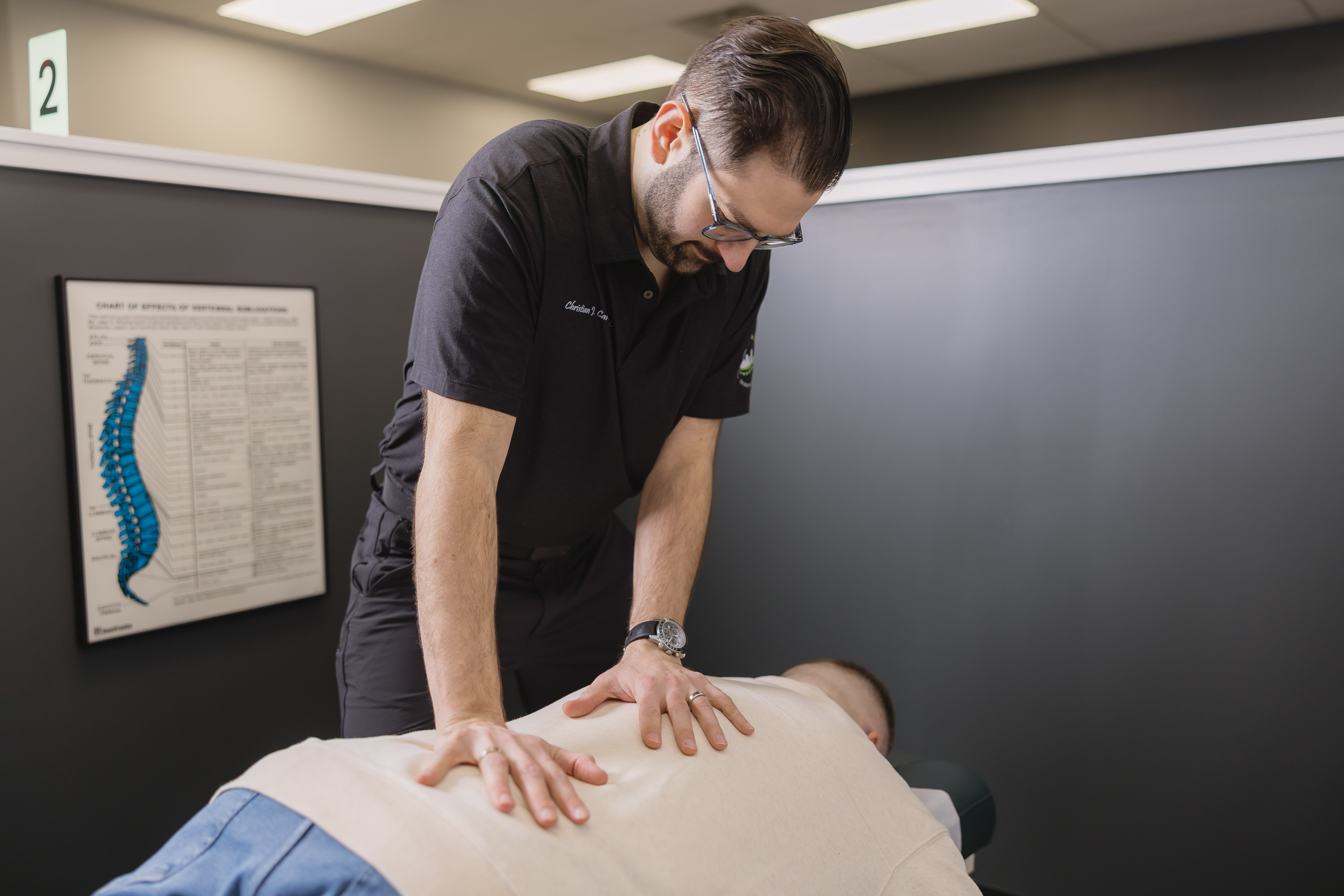
Every patient begins with a comprehensive evaluation.
Rather than applying the same treatment to everyone, we develop recommendations based on your symptoms, examination findings, and personal goals.
Depending on your condition, your care plan may include:
Chiropractic adjustments
Soft tissue therapy
Corrective exercises
Spinal decompression therapy
Therapeutic stretching
Cold laser therapy
Electrical stimulation
Postural education
Clinical Perspective: Why Two Patients Rarely Receive the Same Treatment Plan
One of the most common questions we hear is, "What are you going to do?"
The answer depends on what we find.
A patient with primarily muscular pain may benefit from a different combination of treatments than someone with a disc injury or nerve irritation. In some cases, chiropractic adjustments may be the primary focus. In others, spinal decompression, rehabilitation exercises, or soft tissue therapies may play a larger role.
Our goal is to recommend the most appropriate conservative treatment based on your individual condition and not just a one-size-fits-all approach.
What Happens During Your First Visit?
Your first appointment is focused on understanding your symptoms.
We'll review your health history, discuss how your pain began, evaluate your posture and movement, perform orthopedic and neurological testing, and determine whether imaging or additional evaluation is appropriate.
Before recommending care, we'll explain our findings, answer your questions, and discuss the treatment options that best fit your condition and goals.
Learn More About Your First Visit
Frequently Asked Questions
Can a chiropractor help lower back pain?
Many people seek chiropractic care for lower back pain caused by joint dysfunction, muscle strain, poor posture, disc-related conditions, and other mechanical issues. A thorough evaluation helps determine the source of your symptoms and whether chiropractic care may be appropriate.
What causes lower back pain?
Lower back pain can develop from a variety of causes, including muscle strains, ligament injuries, arthritis, herniated discs, spinal stenosis, poor posture, repetitive movements, sports injuries, and motor vehicle accidents. Identifying the underlying cause is an important first step in creating an effective treatment plan.
Should I see a chiropractor or wait for my back pain to go away?
Minor muscle soreness often improves with time. However, pain that lasts more than a few days, keeps returning, travels into the leg, or interferes with daily activities should be evaluated to determine whether additional treatment is needed.
Can sitting all day cause back pain?
Yes. Sitting for prolonged periods, especially with poor posture, it can increase the stress on the muscles, joints, and discs of the lower back. Regular movement, proper ergonomics, and strengthening exercises may help reduce this strain.
Is walking good for back pain?
For many people, gentle walking can help reduce stiffness and improve circulation. However, the best activity depends on the cause of your pain. Some conditions benefit from movement, while others may require temporary activity modification.
What is the difference between muscle pain and a herniated disc?
Muscle strains often cause localized soreness and stiffness, while a herniated disc may produce symptoms such as pain traveling into the leg, numbness, tingling, or weakness. A physical examination can help distinguish between these and other causes of back pain.
How long does lower back pain usually last?
Recovery depends on the cause of the pain. Mild muscle strains may improve within days to weeks, while disc injuries or chronic conditions often require a longer course of conservative treatment and rehabilitation.
Can chiropractic care help prevent future episodes of back pain?
Many patients choose to continue with maintenance care, corrective exercises, and ergonomic changes after their symptoms improve. Addressing movement patterns and spinal function may help reduce the likelihood of recurring flare-ups.
When should I go to the emergency room for back pain?
Seek immediate medical attention if you experience severe trauma, loss of bowel or bladder control, significant weakness, numbness in the groin area, or other symptoms that could indicate a medical emergency.
What happens during my first chiropractic visit for back pain?
Your first visit typically includes a review of your health history, discussion of your symptoms, orthopedic and neurological testing, movement and posture assessment, and recommendations for the next steps in your care.
Related Conditions & Services
Find the Cause of Your Back Pain
You don't have to "live with it."
Whether your symptoms began yesterday or have been affecting you for years, understanding what's causing your back pain is the first step toward lasting relief.
If you're experiencing persistent back pain, stiffness, or recurring flare-ups, we're here to help.
Schedule your evaluation today and discover a personalized approach to back pain relief.



Our Services
Contact Info
Phone: (317) 884-2636
Fax: (317) 884-2633
Hours of Operation
- Monday 9:00am – 12:00pm & 2:00pm – 6:00pm
- Tuesday 1:00pm – 6:00pm
- Wednesday 9:00am – 12:00pm & 2:00pm – 6:00pm
- Thursday 9:00am – 12:00pm
- Friday 9:00am – 12:00pm & 1:00pm – 4:00pm
- Saturday Closed
- Sunday Closed

© 2026 Emerson Chiropractic. All rights Reserved. Accessibility Statement - Privacy Policy - Terms & Conditions - Sitemap
Powered by:
